

In many restaurants, customer history lives in emails, notebooks, team mementos and a few PDFs. As long as the same person follows the file, it can work. As soon as she is absent, everything becomes fragile.
Centralizing history is not just for storage. This allows you to respond better, sell faster, avoid repeated errors and give the customer the impression of being recognized.
Save the information that really helps
A useful history should not become a huge administrative file. Above all, it must contain what helps the team sell and serve correctly.
The important data is simple: contact details, company, past events, budget, preferences, allergies, special conditions, signed documents and post-event comments.
- Last event organized
- Final number of participants
- Menu or formula chosen
- Budget signed
- Preferences and constraints
- Team feedback after service
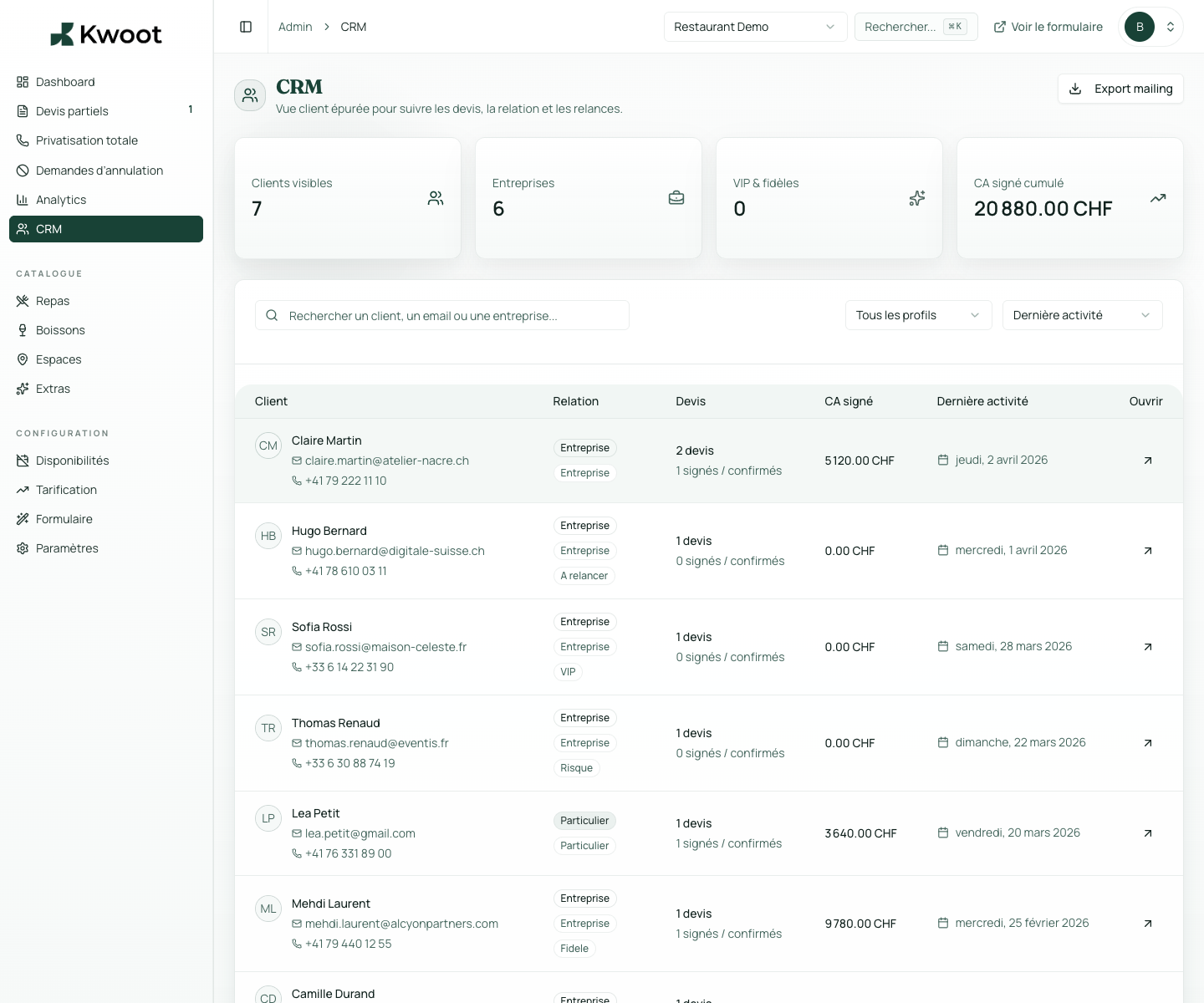
Respond faster to regular customers
A regular customer doesn't want to repeat everything. If you find their last event, you can propose a basis immediately: “Would you like to return to the November format with a few adjustments?”
This continuity gives a high-end impression without marketing speech. The customer feels that the restaurant has control over his file.
Protect the team against oversights
Important preferences must survive schedule changes. An allergy, delivery access, billing constraint or secondary contact should not depend on a person's memory.
A shared history reduces operational errors and facilitates transmissions before the big day.
Use history to restart intelligently
The history allows you to identify clients who regularly organize: annual seminars, team meals, end-of-year evenings, board meetings.
Instead of sending a generic newsletter, you can follow up with a specific message: “Last year, you organized your team dinner at the beginning of December. Would you like us to reserve an option this year?”
Measure the value of repeat customers
A client who organizes three events per year is worth more than an isolated file. By centralizing the history, you can identify your best accounts and offer them more attentive monitoring.
It is also useful for strategy: which sectors are coming back, which formats are repeated, which dates are requested, which offers sell better.
Add feedback after each event
The most useful history is built after the service. Take two minutes to note what went well, what changed on the big day and what to anticipate if the customer returns.
These short notes become very valuable when responding to a new request. They avoid making the same mistakes and help the team come up with a fairer offer.
- Final number of participants
- Options actually consumed
- Points to watch out for next time
- Future recovery opportunity
To remember
- Customer history speeds up response and reassures regular customers.
- Key information must be accessible to the entire team concerned.
- Past events help to restart at the right time.
Frequently asked questions
Is a simple spreadsheet enough?
It may be enough at first, but it quickly becomes limited as soon as you have several quotes, documents, payments and people on the team.
What information should you avoid storing?
Avoid unnecessary or sensitive notes. Keep only the information necessary for the commercial relationship and the organization of the event.
Who should have access to the history?
The people who track requests, prepare events and invoice. Access must remain useful and controlled.

