

Restaurateurs are often hesitant to restart. Fear of disturbing, fear of appearing too commercial, fear of insisting. However, a private event request involves a date, a team and sometimes an entire room.
Follow-up is not harassment if the message is useful, short and respectful. The customer often needs a reminder, clarification or a simple link to move forward.
Reroll based on status, not memory
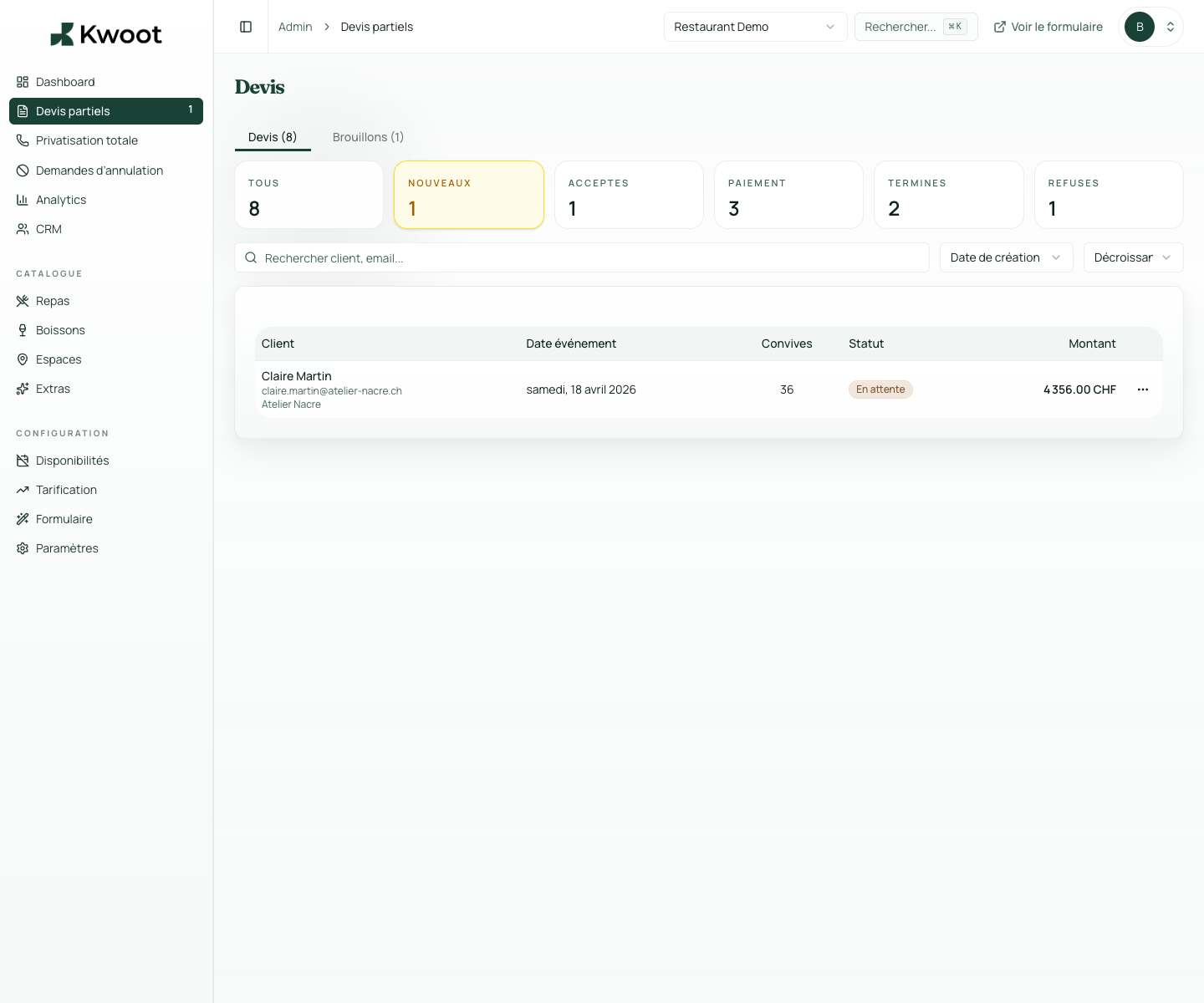
A new file, a quote sent and a quote signed without deposit do not require the same follow-up. The first step is therefore to define clear statuses.
With visible statuses, the team knows what to do every morning: recall new requests, follow up on quotes sent, check deposits and close lost files.
- New request
- Missing information
- Quote sent
- Planned relaunch
- Sign
- Deposit paid
- Lost or canceled
Send the first reminder after 48 hours
After sending a quote, 48 hours is a good time frame for a first follow-up. The customer has had time to read, but the request is still fresh.
The message must recall the context and the expected action. Avoid vague sentences. Be specific: date, event, validity, signature link or next step.
Relaunch before the deadline, not after
If your quote is valid for 7 days, the most useful reminder arrives before the end of validity. It helps the client decide and allows you to free up the date if necessary.
A follow-up after the deadline looks like an emergency on the restaurant side. A reminder before the deadline is like a professional reminder.
Adapt the tone to the type of customer
A company is waiting for a structured recovery. An individual expects more warmth and simplicity. In both cases, the message should be kept short.
Do not multiply arguments. Choose the information that really helps: availability, budget, deposit, conditions, number adjustment.
Know how to fence properly
Not all requests should remain open. If the customer no longer responds, close the case gracefully. This keeps your schedule clean and your team focused on active opportunities.
A closing message can also leave the door open: “We remain available if your project is confirmed.”
Prepare three follow-up models
To save time, prepare three messages: a reminder after the quote, a reminder before the end of the validity period and a polite closing. The team can customize them in seconds instead of rewriting each time.
These models must remain human. Always add the date, event name and expected action. This is what turns an automatic message into a useful reminder.
- Follow-up 48 hours after quote
- Reminder before offer expires
- Reminder after signature without deposit
- Closing message if the customer no longer responds
To remember
- Restarting is normal when a date is blocked.
- The first reminder ideally arrives 48 hours after sending the quote.
- A clear status avoids oversights and late reminders.
Frequently asked questions
How many reminders to send?
Two reminders are often enough: one after 48 hours, one before the end of the validity of the quote. For large files, add a call.
Should I follow up by telephone?
Yes for high value files or close dates. The telephone allows you to understand the real blockage.
What to do if the client asks for time?
Give a clear deadline if the date allows, but write down the new deadline. Otherwise, offer to get back in touch when the project is confirmed.

