

A private event without a deposit is a business risk. The restaurant blocks a date, prepares a proposal, sometimes coordinates a team, but the customer can still change his mind without immediate cost.
The deposit is not a distrust of the customer. This is a healthy rule to protect the date, cover some of the preparation and confirm commitment on both sides.
Set a simple percentage
The most common is to request a deposit between 30% and 50% depending on the amount, date and level of preparation. The right percentage should be easy to understand and explain.
For smaller events, a fixed amount may be clearer. For large private events, a percentage better reflects the commitment requested.
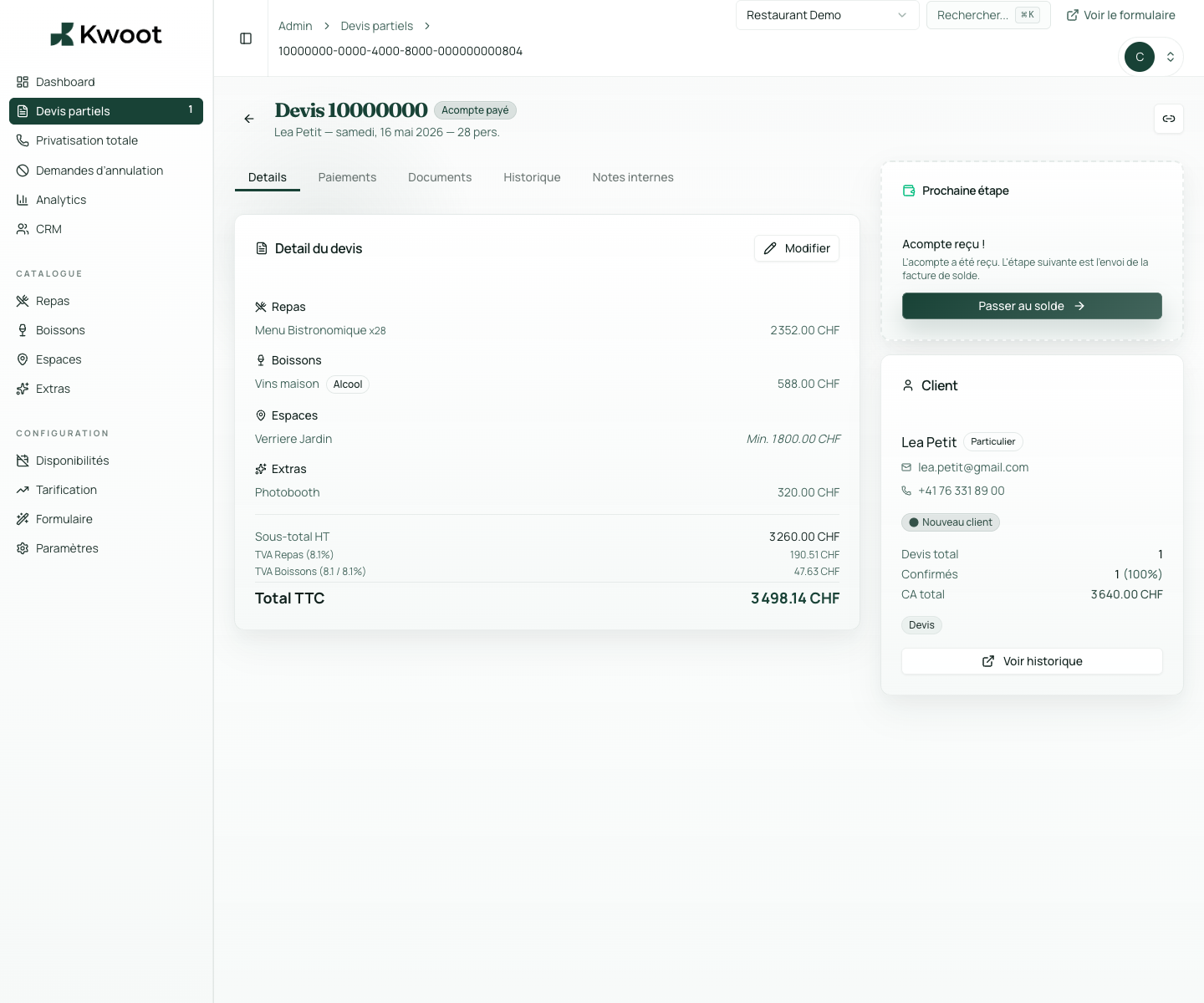
Ask for the deposit at the time of signing
If the customer signs today but pays later, the confirmation remains incomplete. The best time to collect the deposit is right after signing the quote.
The quote must clearly indicate that the reservation is confirmed after signature and payment of the deposit. This sentence avoids a lot of ambiguity.
Make payment immediate
A RIB sent by email can work, but it adds time: copy the contact details, create a transfer, wait for internal validation, check receipt.
When possible, offer online payment. The customer can confirm from their phone and the team quickly sees if the reservation is truly secure.
Separate deposit, balance and conditions
The customer must know what he is paying now and what he will pay later. The balance can be calculated after the event, depending on the final number, drinks consumed or options added.
Cancellation conditions must be visible before payment. A clear rule is better than a tense discussion after the fact.
- Deposit amount
- Payment deadline
- Balance billing time
- Cancellation conditions
- Adjusting the final number
Track unpaid debts as risky files
A signed quote without deposit must appear immediately in your follow-up. Otherwise, the team may believe that everything is validated and discover too late that the payment is missing.
Every morning, check unpaid signed files. A short reminder is often enough to resolve the situation.
Plan for exceptions without breaking the rule
Some loyal customers or large accounts may request payment after invoice. This can be justified, but the exception must be written and validated. Otherwise, the team no longer knows what rules to apply.
The default rule remains simple: no confirmed reservation without signature and deposit. Exceptions must be rare, dated and visible in the file.
- Name of person validating the exception
- Reason for exception
- Expected payment date
- Automatic reminder before the event
To remember
- The deposit must be requested at the time of confirmation.
- Online payment reduces delays and forgetfulness.
- A signed quote without deposit remains a file to follow closely.
Frequently asked questions
How much deposit to ask for?
30% is a common starting point. Adapt according to the total amount, the date, the necessary preparation and the risk of cancellation.
Should the deposit be refundable?
It depends on your conditions. The important thing is to write it clearly before signing and paying.
Can we confirm a date without a deposit?
It's possible, but risky. If you are doing this for a loyal customer or a well-known business, keep a written record of the exception.

